
Detect occupancy
In intermittently used areas, lighting can switch or dim in response to occupancy. Detection coverage, mounting height, time delays and any background lighting need to suit the space.
A workstation by a window needs different lighting from a warehouse aisle. We help coordinate luminaires, sensors and controls around the way your spaces are used, so light is available where it is needed.
Discuss controls for your project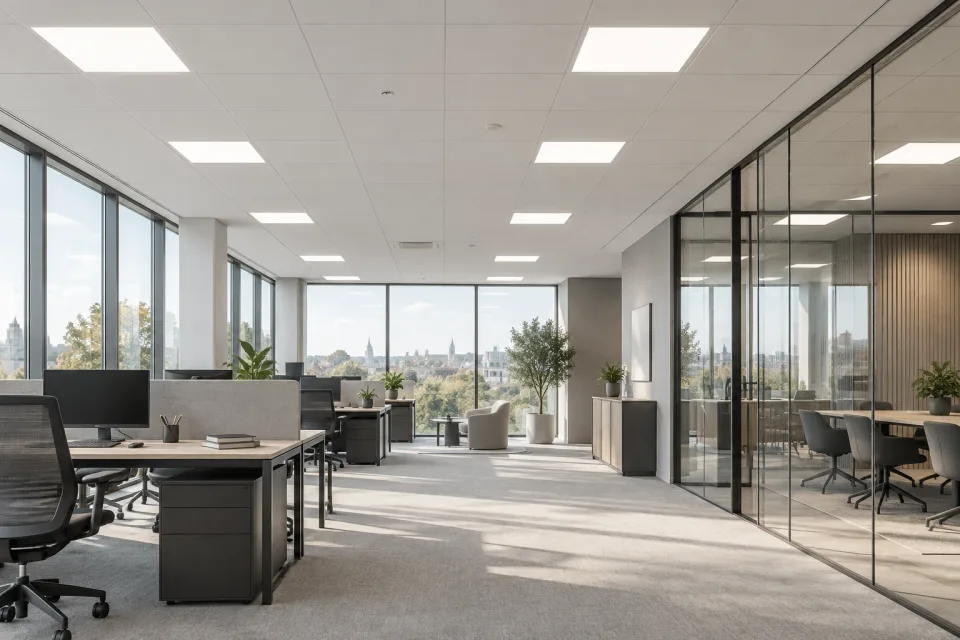
Rooms, working routines and users come first. These define the lighting zones and how people operate them. Together, we then select the appropriate technology.
In intermittently used areas, lighting can switch or dim in response to occupancy. Detection coverage, mounting height, time delays and any background lighting need to suit the space.
Window zones and workstations deeper inside a room are considered separately. A coordinated daylight control system can adjust artificial lighting to the daylight available.
Push buttons and preset lighting scenes make it easy to adjust the lighting. This provides suitable light for focused work, meetings or events.
DALI connects compatible control gear to digital lighting controls. Sensors provide information, which an application controller processes to control the luminaires. DALI-2 also covers input devices such as occupancy sensors, light sensors and push buttons.
Lighting design & adviceControl workstations near the facade separately from those deeper inside the room. Keep scene selection accessible for meetings.
Match detection to aisle geometry, shelving, mounting height and traffic routes. Agree adjacent zones and background lighting with the operator.
Account for different hours of use. Review delays, manual controls and transitions to neighbouring areas together.
Bring together room plans, usage, daylight, operating hours and the existing installation.
Describe luminaire groups, sensor positions, control points and the required functions.
Agree settings, responsibilities and functional checks with the electrical contractor.
Try the settings with users and document groups, parameters and operating guidance.
You do not need every answer yet. Existing documents help us identify practical next steps.
This depends on the luminaires, drivers, wiring and existing controls. Nameplate details, plans and a description of the intended operation help determine which components can be retained.
No. A driver power setting, for example a DIP switch, establishes an operating setting. A compatible dimmable version additionally allows the light level to change during operation. The actual product version matters.
This depends on usage, daylight, existing settings and the selected control strategy. We consider these assumptions for the individual project. A general saving percentage is not a reliable substitute.
Tell us about your rooms, usage and existing equipment. We will discuss a suitable combination of luminaires, sensors and controls with you.