We develop lighting for people and spaces, aiming to use energy thoughtfully and keep products useful for longer. Lighting quality, technical innovation and responsible use of resources belong together.
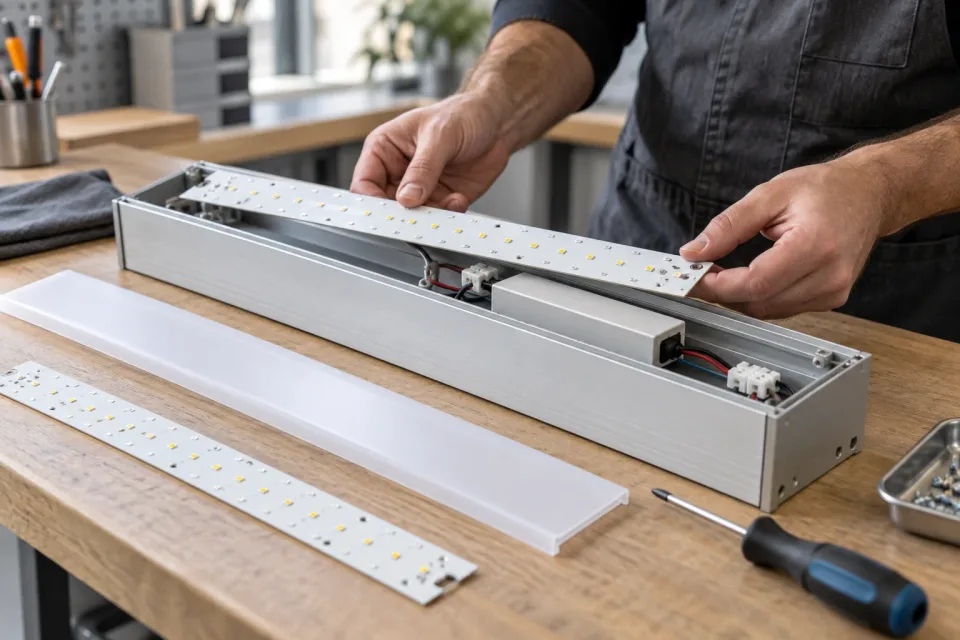
That means looking beyond installation: how can a luminaire be maintained, which components can be replaced, and how can the system adapt to changing requirements?
Renew components and retain suitable housings · illustrationMISSION & VISION
Connecting lighting quality with responsibility.
Our mission
We combine personal advice, sound lighting design and suitable LED technology to meet our customers’ actual needs. We aim to create good visual conditions, avoid unnecessary energy use and consider maintenance and future development from the start.
Our vision
We aim to become a leading manufacturer of high-quality, sustainable LED luminaires in the German market. Long-term usefulness is our benchmark: systems that work reliably, can be modernised sensibly and retain their quality beyond their first period of use.
GH36d / GR6d
Replace light sources, retain useful luminaires.
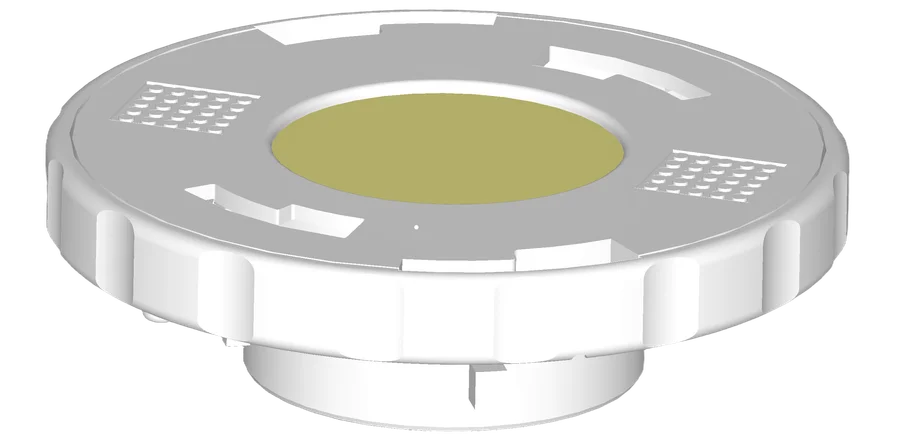
GH36d and GR6d separate the light source from the luminaire housing. In luminaires designed for them, the light-producing unit can be replaced while suitable housings and other parts remain in use. This creates a practical basis for maintenance and modernisation.
Replaceable LED boards and separately accessible drivers support the same approach. The particular configuration matters: mechanical design, electrical specification, thermal management and distribution must remain compatible after replacement. We clarify available replacement options for the actual product.
GH36dGR6d
CIRCULAR ECONOMY
Keep luminaires useful and preserve resources.
For us, circular thinking starts with design and selection of a suitable solution. The aim is to preserve the value of products and components for as long as possible. Recycling is an important final step; first we assess maintenance, repair and technically appropriate refurbishment.
01
Design for the need
Coordinate use, distribution and controls to avoid unnecessary equipment and account for future changes in the concept.
02
Maintain and care
Consider access, cleaning and service intervals so the installation can be looked after in everyday operation.
03
Repair selectively
Replace suitable light sources, LED boards or drivers without replacing all the components that remain useful.
04
Refurbish and renew
Assess which parts can be retained and which need renewal in refurbishment or remanufacturing. Condition, safety and effort determine the scope.
05
Recover materials
At the end of useful life, separate parts where possible and use suitable recovery routes. Actual recovery depends on materials and the available disposal process.
Condition, technical safety, energy demand and refurbishment effort together determine the most appropriate next step.
INNOVATION & NEW TECHNOLOGY
Develop technology. Improve its usefulness.
New technology is worthwhile when it improves lighting quality, operation or continued use. We therefore consider optics, electronics, controls and product construction as one connected system.
Occupancy and daylight controls can reduce unnecessary operating hours and excess light. Settings should suit the space, activity and intended user controls.
Digital lighting design
DIALux and 3D models allow us to assess alternatives before installation. Distribution, glare and relevant working surfaces provide a basis for informed decisions.
Open interfaces
DALI-2 and suitable interfaces can support integration into a control concept. Functions and compatibility are checked against the actual components used.
Operational data
D4i-capable components can supply energy and diagnostic data. We consider these options where reporting and maintenance processes provide a practical benefit; the available functions depend on equipment and system integration.
GUIDED BY THE GLOBAL GOALS
Five goals connected to our work.
The United Nations’ 17 Sustainable Development Goals connect environmental, social and economic development. Goals 8, 9, 11, 12 and 13 are particularly relevant to our work on lighting solutions. We explain their connection to our aims and decisions as areas for action, not as certification.
SDG 8
Decent work and economic growth
Fair cooperation, productive employment and safe working conditions.
Work respectfully together and support good working environments.
Fairness, reliability and respectful relationships are company values. In lighting projects, we consider people’s visual tasks and coordinate with qualified partners. Appropriate lighting can support conditions for safe, focused work; it does not replace comprehensive workplace safety planning.
SDG 9
Industry, innovation and infrastructure
Resilient infrastructure and resource-conscious innovation.
Develop existing installations with suitable technology.
Modular light sources, digital planning and appropriate controls offer ways to modernise lighting systems. We aim to connect technical improvements with maintainability and clear interfaces. New functions are assessed for their practical value and suitability for the actual project.
SDG 11
Sustainable cities and communities
Inclusive, safe places that remain useful over time.
Plan lighting for the buildings and spaces people use every day.
Suitable lighting supports orientation and use in schools, workplaces and public buildings. Outdoor projects require attention to distribution, operating times and unwanted spill light. We consider the existing installation and the needs of its surroundings.
SDG 12
Responsible consumption and production
Use resources thoughtfully, prevent waste and keep products useful.
Replaceable light sources, accessible drivers and documented replacement options can make practical repair possible. Refurbishment and remanufacturing can bring suitable components into another period of use. We assess these options for each product and consider later material separation and recovery.
SDG 13
Climate action
Climate protection and thoughtful management of energy-related emissions.
Reduce energy demand and evaluate changes transparently.
Efficient LEDs and demand-based controls can reduce electricity consumption against a suitable reference installation. The effect depends on the existing system, operating hours, control settings and electricity mix. We use transparent assumptions and also consider continued use of existing components.
Our own interpretation using the SDG colour palette. No UN certification or partnership; these contents have not been reviewed or endorsed by the United Nations.
We aim to keep improving our lighting solutions and the processes behind them. We connect customer requirements with technical possibilities and focus on long-term use.
For each project, we clarify replaceable components, documentation needs and ways to assess consumption and maintenance. Claims about savings or environmental effects require a suitable baseline. This turns an ambition into an informed decision about your lighting.